
Botox for Chronic Migraine: An FDA-Approved Preventive Treatment
If you experience 15 or more headache days per month — with at least 8 of them qualifying as migraines — you are living with chronic migraine, one of the most disabling neurological conditions in the world. The cumulative toll of that many migraine days: lost workdays, canceled plans, sensitivity to light and sound, nausea, and the constant uncertainty of when the next attack will arrive.
BOTOX® (onabotulinumtoxinA) is the only FDA-approved preventive treatment specifically indicated for chronic migraine, and it is available at Vitality Physical Medicine in Davenport, Iowa under the care of Dr. Joseph Brooks, DO. For patients who have struggled to find adequate relief through preventive medications, Botox offers a different mechanism, a different delivery, and for many, a meaningfully different outcome
What Is Chronic Migraine?
Chronic migraine is defined by clinical criteria: 15 or more headache days per month for at least three consecutive months, with at least 8 of those days meeting diagnostic criteria for migraine. This distinguishes it from episodic migraine, in which attacks occur fewer than 15 days per month.
Chronic migraine affects approximately 1 to 2 percent of the global population and is disproportionately prevalent among women in their 30s and 40s.
Many patients with chronic migraine have tried multiple preventive medications — beta-blockers, antidepressants, anticonvulsants, CGRP inhibitors — with incomplete results, intolerable side effects, or both. If that describes your experience, you are not alone, and Botox may represent a meaningfully different option.
How Does Botox Prevent Migraines?
The mechanism of Botox in migraine prevention is distinct from its use in cosmetic applications. Rather than relaxing facial muscles for aesthetic purposes, the migraine protocol delivers Botox to specific muscles around the head and neck to interrupt the peripheral pain pathways involved in migraine generation.
Botulinum toxin blocks the release of neurotransmitters — including substance P and CGRP (calcitonin gene-related peptide) — that are involved in sensitizing pain fibers and triggering the cascade that produces a migraine attack. Over time and with repeat treatment cycles, this reduces the frequency and severity of headaches by downregulating the peripheral sensitization that underlies chronic migraine.
The PREEMPT clinical trials — the pivotal studies supporting FDA approval — demonstrated an average reduction of approximately 8 to 9 headache days per month compared to placebo, with nearly half of patients experiencing a 50% or greater reduction in headache days after two treatment cycles. For patients with 15 to 25 headache days per month, those reductions are clinically transformative.
Important distinction: Botox for chronic migraine is a preventive treatment, not an abortive one. It will not stop a migraine already in progress. Its benefit is cumulative — it reduces how often migraines occur, and often reduces their severity when they do.
What Does the Treatment Protocol Look Like?
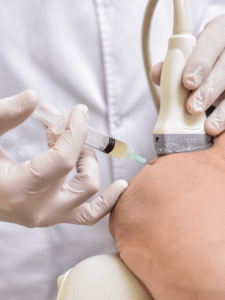
The Botox chronic migraine protocol is standardized based on the PREEMPT trial design and FDA approval. It involves injections across seven areas of the head and neck, targeting muscles that play a role in migraine generation.
Injection sites include:
- Frontalis (forehead)
- Corrugator and procerus (between and above the brows)
- Temporalis (temples)
- Occipitalis (back of the head)
- Cervical paraspinal muscles (back of the neck)
- Trapezius (upper shoulders)
The appointment typically takes 20 to 30 minutes. The needles used are very fine, and most patients describe the experience as a series of mild pinching sensations. There is no downtime — you can return to your normal day immediately after the procedure.
Treatment is repeated every 12 weeks. This interval is not arbitrary — it corresponds to the duration of Botox’s effect and is the schedule used in the clinical trials that established its efficacy.
How Many Treatments Are Needed Before Seeing Results?
Results from Botox for chronic migraine are cumulative. Some patients notice improvement after the first treatment cycle, but the full benefit of the therapy is typically not apparent until after the second or third round of injections — meaning 24 to 36 weeks into treatment.
This is a critical point for setting realistic expectations. Patients who discontinue after a single treatment cycle may be stopping before the therapy has had a fair opportunity to work. Dr. Brooks will discuss what to monitor between appointments and how to assess whether the treatment is working for you.
Who Is a Candidate for Botox Migraine Treatment?
Botox for chronic migraine is most appropriate for adults who meet all of the following:
- A diagnosis of chronic migraine (15 or more headache days per month, with at least 8 qualifying as migraines)
- Duration of at least 3 months at that frequency
- Prior trial of at least two preventive migraine medications without adequate relief (commonly required for insurance authorization)
You may also be a strong candidate if:
- Daily oral medications are difficult to tolerate or inconvenient
- You prefer an injection-based approach on a quarterly schedule rather than a daily pill
- Prior preventive treatments have been tried and failed
Candidacy is always determined through a clinical evaluation. Dr. Brooks will review your headache history, current and prior medications, and overall health to confirm that Botox is appropriate and to document the clinical basis for insurance authorization.
Does Insurance Cover Botox for Chronic Migraine?
Yes — BOTOX® for chronic migraine is FDA-approved and is covered by most commercial insurance plans and Medicare Part B when medical necessity criteria are documented. Typical requirements include a confirmed diagnosis of chronic migraine and documentation that certain preventive medications were trialed without adequate benefit.
Prior authorization is almost always required. Our team is experienced with the documentation process and will work with your insurance to coordinate coverage before your first treatment.
Frequently Asked Questions
Does Botox hurt for migraine treatment?
Most patients find the injections very tolerable. The needles used are fine-gauge, and each injection delivers only a small volume of medication. The most commonly described sensation is a brief, mild pinch. Some areas — particularly the back of the head and neck — may be slightly more sensitive than others, but the procedure is generally well tolerated and takes less than 30 minutes.
How long before I notice a difference?
Some patients notice a reduction in headache frequency within the first four to six weeks after their initial treatment. For others, meaningful improvement becomes apparent after the second treatment cycle, around weeks 16 to 24. The benefit tends to build with each successive treatment, which is why consistency with the 12-week schedule matters.
Will Botox stop a migraine that’s already started?
No. Botox for chronic migraine is a preventive therapy — it is designed to reduce how frequently migraines occur, not to treat an acute attack once it has begun. Patients typically continue using their usual acute treatments (triptans, NSAIDs, anti-nausea medications) as needed even while on the Botox preventive protocol.
Can I get Botox for migraines if I also get cosmetic Botox?
This is worth discussing with Dr. Brooks, particularly regarding injection timing and dosing. In general, the muscles targeted by the migraine protocol and those targeted for cosmetic purposes overlap in the forehead and brow region. Dr. Brooks will review your specific situation during your consultation.
Is Botox for migraine the same as cosmetic Botox?
The medication is the same — onabotulinumtoxinA — but the application is entirely different. The migraine protocol involves specific injection sites, standardized doses, and a therapeutic mechanism focused on pain pathway modulation rather than muscle relaxation for cosmetic effect. The two uses require different clinical expertise and are billed and authorized differently.
Chronic Migraine Treatment at Vitality Physical Medicine in Davenport, Iowa
Dr. Joseph Brooks is a board-certified Physical Medicine and Rehabilitation physician with deep expertise in neuromuscular conditions and precision injection techniques. His clinical training in electrodiagnostic medicine and his experience with complex pain conditions position him to evaluate chronic migraine carefully and deliver the Botox protocol with accuracy.
Vitality Physical Medicine serves patients throughout the Quad Cities region — Davenport, Bettendorf, Rock Island, Moline, and surrounding communities in Iowa and Illinois. We welcome self-referrals, so you do not need a physician order to schedule a consultation.
If chronic migraine is limiting your life, and you have not yet found a preventive approach that works, we encourage you to come in and have an honest conversation about whether Botox is the right next step for you.
Schedule a Chronic Migraine Consultation
Call us: 563-424-6400
Dr. Brooks will review your headache history in detail, discuss your prior treatment experience, and help you understand what Botox therapy realistically offers — including the timeline for results and what to expect at each step of the process.